
Placement Tests
Updated for 2026-27
When students first log into MathFactLab, they automatically take a placement test. This assessment determines the appropriate starting level for each student within the program and provides teachers and parents with baseline data on the student's math fact fluency performance.
The MathFactLab placement test consists of three components:
- Warm-up: Introduces students to the assessment format.
- First operation assessment: Assesses either addition or multiplication, depending on the student's assigned learning mode.
- Second operation assessment: Assesses the corresponding inverse operation, either subtraction or division.
Important Points to Keep in Mind
- Automatic administration: Students are automatically presented with the placement test when they first log into MathFactLab.
- Assessment length: The length of the placement test varies depending on the student's math fact knowledge.
- Completion over multiple sessions: Students do not need to complete the placement test in a single sitting. If a student logs out before completing the test, they will resume at approximately the same point when they next log in.
- Audio assistance: Students who have difficulty reading the placement test instructions can click the speaker icon in the upper-left corner of the screen to have the instructions read aloud. This feature reads only the instructions, not the math problems.
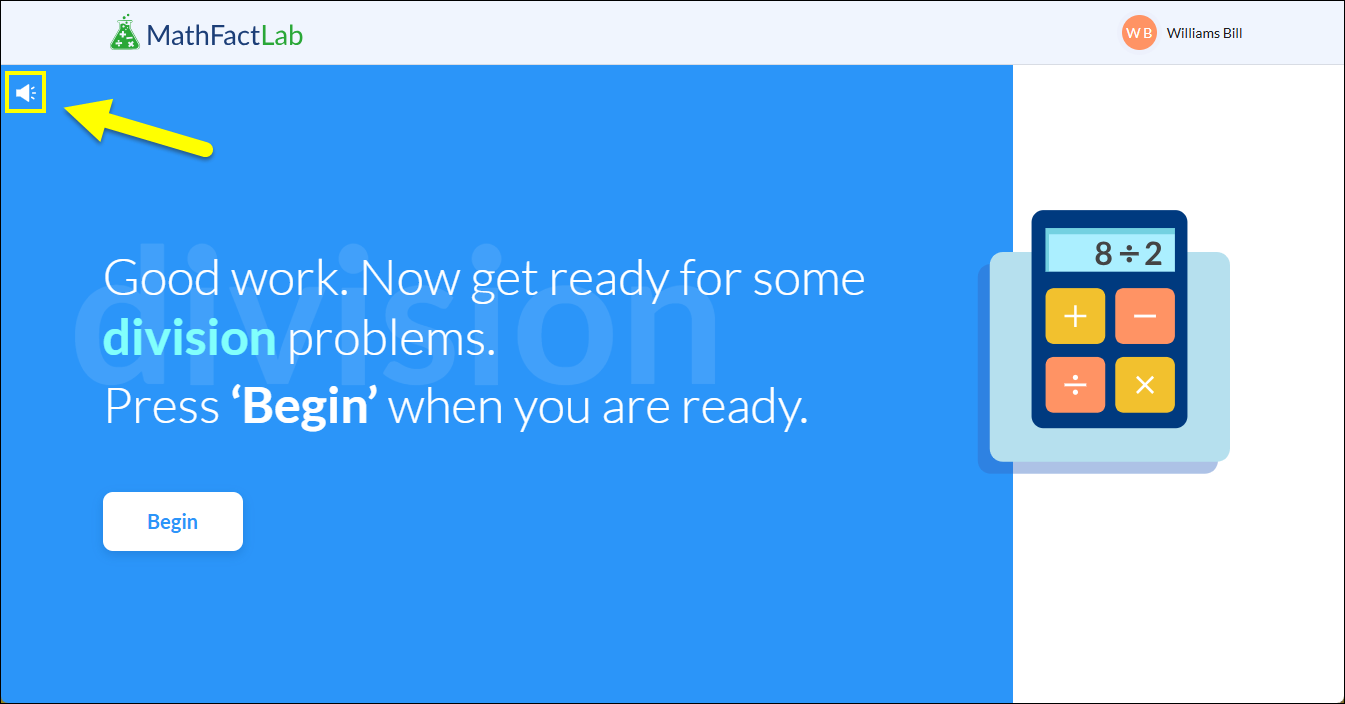
The Warm-Up
When students log into MathFactLab for the first time, they are greeted with a welcome screen that introduces them to the program in four brief steps.

The placement test begins with a warm-up designed to serve two purposes:
- To familiarize students with the assessment format and prepare them for the test ahead.
- To provide teachers and parents with baseline data on the student's typing speed and accuracy.
During the warm-up, students simply type the numbers displayed on the screen. No math calculations are required.
The First Operation's Assessment
Following the warm-up, students are assessed in either addition or multiplication, depending on their assigned learning mode.
The assessment presents a sample of math facts from each successive level, beginning with Level A and continuing until the problems become too challenging. Students are allowed a couple of retakes at each level to account for possible typos.
Note: Assessments are the only time students encounter problems without accompanying models or strategies.
The Second Operation's Assessment
After completing the first operation's assessment, students move on to either subtraction or division. As with the first assessment, students progress through a sample of problems from each successive level until the problems become too challenging.
Note: Because the placement test's stopping point is determined by student performance, the time needed to complete the test can vary considerably from student to student.
Placement within the Program
Each student's starting level is determined by their combined performance on both operation assessments.
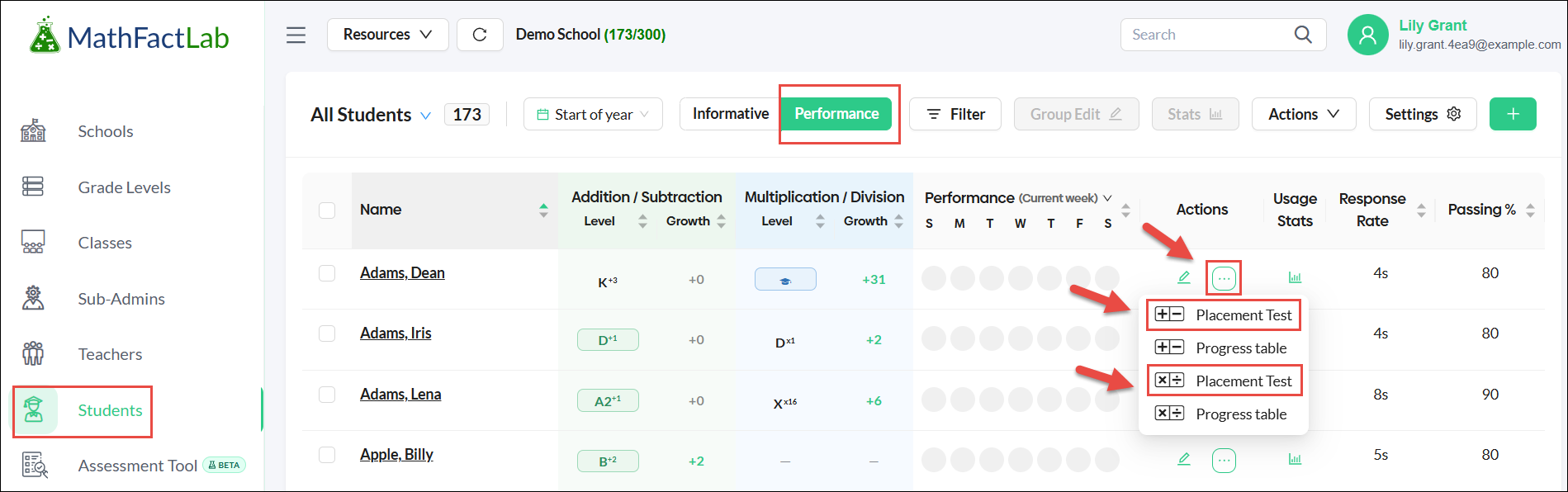
To view a student's Placement Test Report, go to the Performance view of the Students tab, click the three-dot Actions button in the student's row, and select Placement Test.
If the student has completed placement tests in both learning modes, both reports will be available.

If you feel the placement test results do not accurately reflect a student's math fact knowledge, you have two options:
- Reassess the student: Have the student retake the placement test. The steps for reassessing an individual student differ from those for reassessing multiple students. Instructions can be found in Reassessments: Reassigning Placement Tests.
- Manually adjust the student's level: Click the edit icon in the student's row, select the tab for their current learning mode, and choose the level you feel is most appropriate.
After completing the placement test, students are shown a progress table that identifies their assigned starting level and provides a color-coded overview of their progress:
- Green: Levels at which the student has demonstrated mastery.
- Blue: Math facts the student will focus on at their current level.
- Grey: Levels the student has yet to reach.
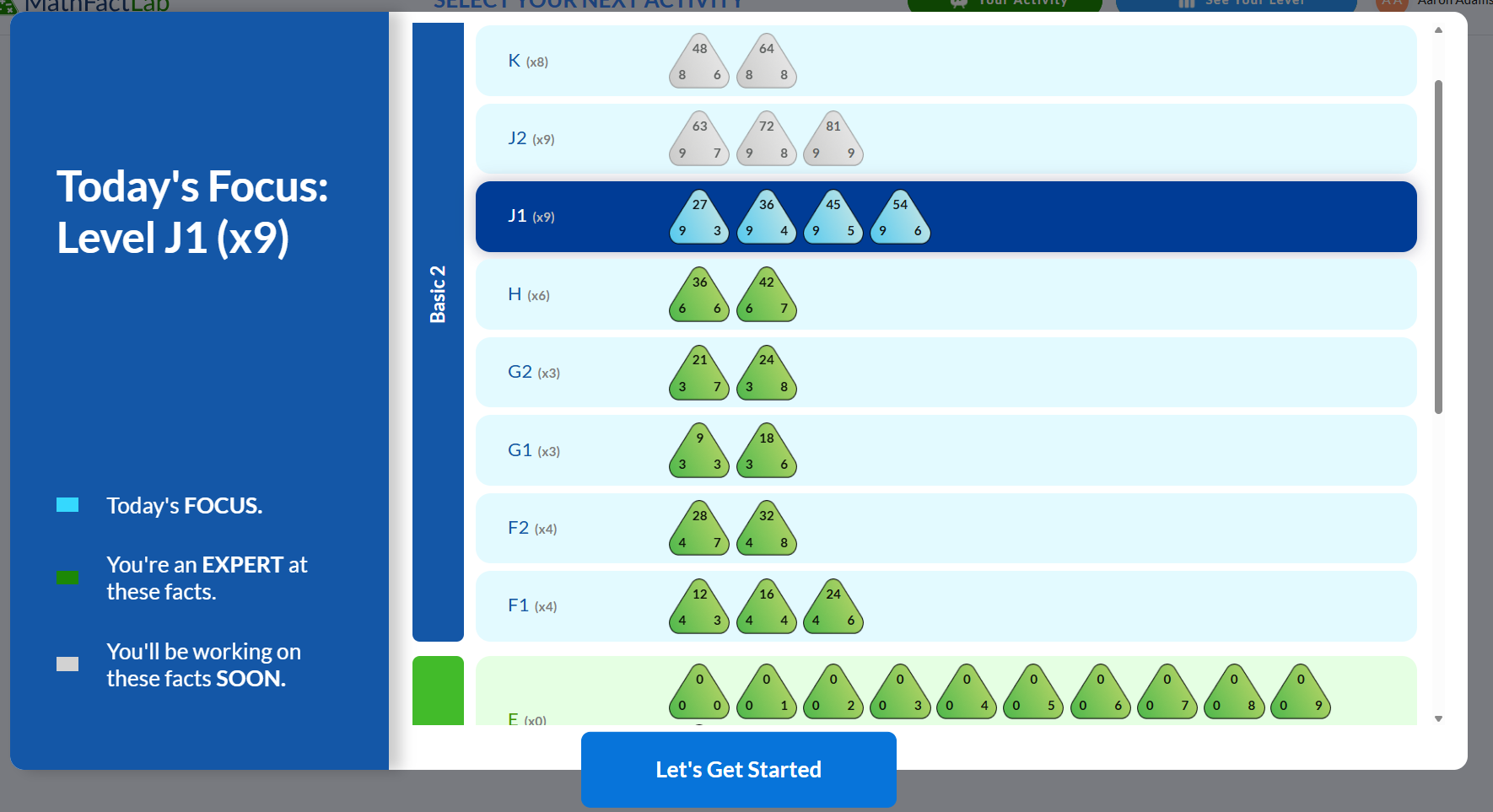
Note: levels are grouped into stages.
@Zoho